
The Dali that exists in travelers’ memories from 10 or 15 years ago has changed. China National Tourism Administration lists Dali as one of China’s National Historical and Cultural Cities. The purely backpacker-focused cafe scene of the early 2010s is thinner now. Chinese domestic tourism has found Dali.
But the bones of what made it good remain: the Ming dynasty walls, the Erhai Lake countryside, the Bai minority presence, and enough independent travelers to make the hostels sociable. It is still the right choice over Lijiang for people who want to slow down rather than be processed through a sight. For the Yunnan route: Yunnan Itinerary.
Key Takeaways
- 2 to 3 nights is the right stay. One day in the old town, one day cycling Erhai Lake.
- More relaxed than Lijiang. Fewer tour groups, more independent travelers.
- Bai culture is visible and genuine. Unlike some tourist-facing minority experiences elsewhere in China.
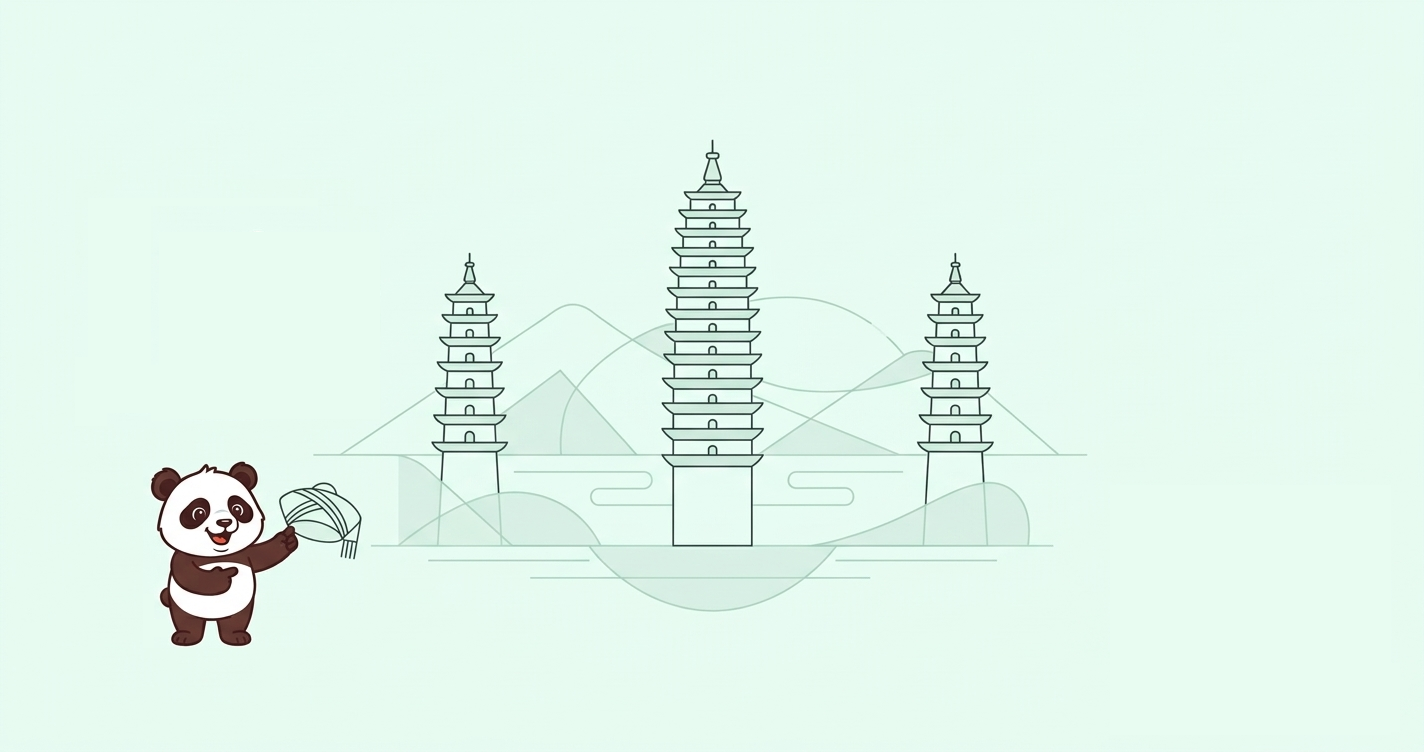
- The Three Pagodas are the famous landmark. Worth the entry fee for the reflection photos.
- Best time: March to May and September to November. Seasonal guide.
- Market day in surrounding villages follows a 5-day rotating calendar. Ask your guesthouse which village has market that day.
The Old Town
Dali old town is smaller than most visitors expect: about 1.5 km by 1 km, inside four city gates. The North Gate (Bei Men) and South Gate (Nan Men) are the most photogenic. The main commercial street is Renmin Lu (People’s Road), running north-south. Most guesthouses are on or just off this street. The eastern section of the old town, away from the main road, is quieter and more residential. Walk there at 7am and you will see a version of Dali that has not changed much in decades.
Cang Mountain and the cable car
Cang Mountain (Cangshan) rises directly west of the old town to 4,122 metres. A cable car (¥80 one way from the south gate area) takes you to a ridge at around 2,600 metres. From there, you can walk the mid-mountain trail that traverses the ridgeline with views over the old town and Erhai Lake. The walk is 9 km one way and takes 3 to 4 hours.
Erhai Lake
Erhai is a 40 km long highland lake at 1,972 metres elevation. The water is very clear. The surrounding countryside, accessed by roads and paths that wind through Bai fishing villages, is excellent cycling territory. Rent a bicycle (¥30 to ¥50) or an electric bike (¥80 to ¥120) at any guesthouse. The full lake circuit takes 2 to 3 days at a leisurely pace. Most travelers do the northern half (Dali old town to Jianchuan area) in one day.
The cormorant fishermen
At dusk, traditional Bai fishermen with trained cormorants still work the shallow waters near Caicun village (15 km north of Dali). Cycle there. The fishermen use the birds to dive and retrieve fish, with rings around the birds’ necks preventing them from swallowing larger catches. The practice is both a working tradition and a tourist attraction now. That complexity is part of what makes it interesting.
The Three Pagodas
Built during the Tang and Song dynasties (9th to 11th centuries). The main pagoda is 70 metres tall. Entry ¥121, which feels steep but includes the temple grounds. The best photograph is from the east (from Erhai Lake side) on a clear day when the three pagodas reflect in the pool in front of them. Arrive early morning for the light and before tour groups.
Where to Eat in Dali
| Dish | What It Is | Where |
| Baked goat cheese (乳饼, rubing) | Fresh Yunnan goat cheese grilled over charcoal. Served with chili sauce. | Street stalls and local restaurants |
| Dali baba (大理粑粑) | Layered flatbread with sesame, scallion, and sometimes pork. | Morning street stalls near the gates |
| Rubing hotpot | Yunnan goat cheese cooked in broth | Local restaurants |
| Local beer (大理啤酒, Dali Beer) | Yunnan’s most famous local brew. Light lager. | Every bar and restaurant |
Frequently Asked Questions
For Lijiang (the next stop on the route): Lijiang Ancient Town Guide. For the Yunnan overview: Yunnan Itinerary. For seasonal timing: Best Time to Visit China.