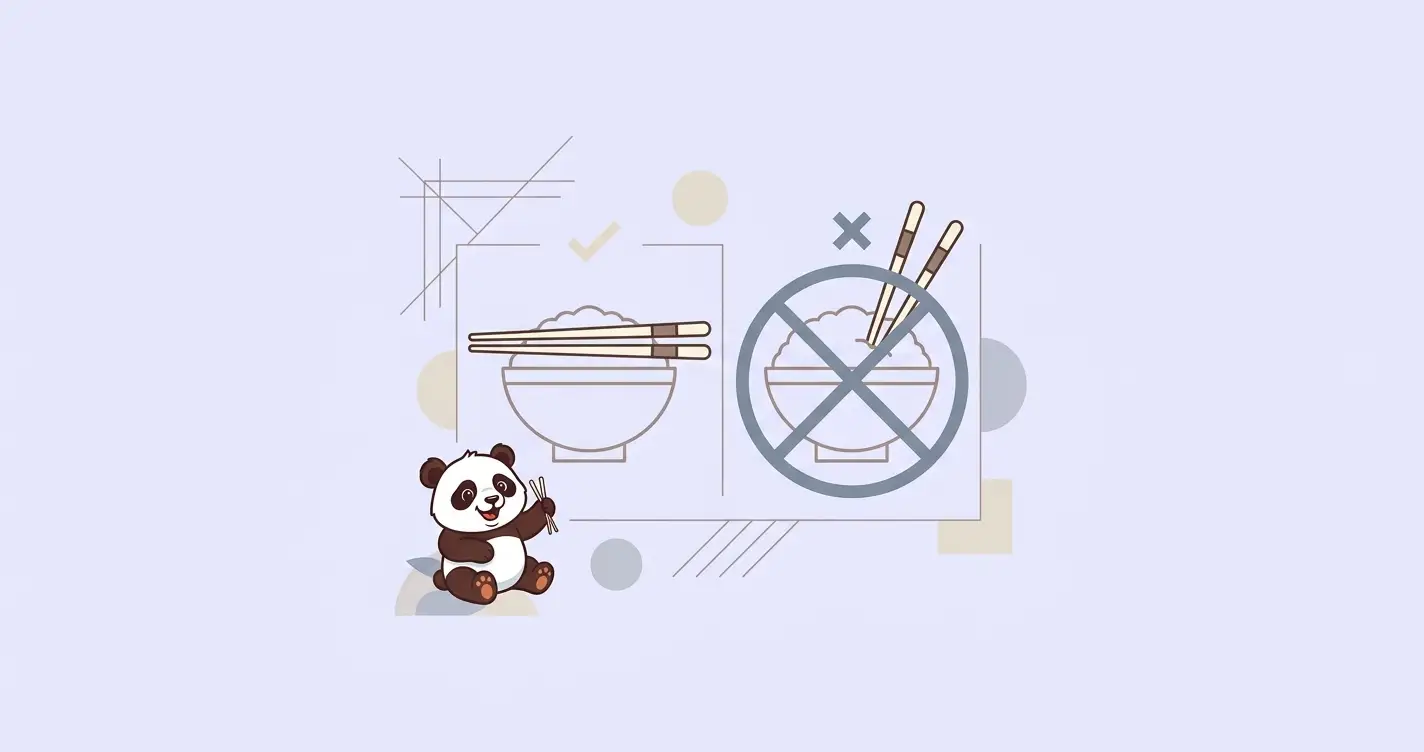
Three things will make you look like you know what you are doing at a Chinese table. The China National Tourism Administration includes dining etiquette in its official guide to Chinese culture for international visitors. Never stick chopsticks upright in rice. Pour tea for others before yourself. Take from the communal dishes in the center, not order individual plates. Everything else is secondary. For the full food context: Ultimate Chinese Food Guide. For cultural etiquette beyond the table: Culture and Etiquette in China.
The Rules That Actually Matter
| Behavior | Rule | Why |
| Chopsticks upright in rice | Never | Resembles funeral incense. A bad omen. |
| Passing food chopstick-to-chopstick | Avoid | Resembles a funeral bone-passing ritual. |
| Pointing chopsticks at someone | Avoid | Same as pointing a finger. Rude. |
| Stabbing food with chopsticks | Last resort only | Considered uncouth. Use a spoon instead. |
| Waving chopsticks while talking | Avoid | Same etiquette as not talking with a fork raised. |
| Using the reverse end to serve others | Good practice | Use the clean (unused) end when no serving chopsticks. |
| Resting chopsticks across the bowl | Fine | Standard resting position. |
| Slurping noodles | Normal | No social stigma. It is how noodles are eaten hot. |
The Shared Table
The fundamental difference between Chinese and Western dining: food is ordered for the table and shared from the center. At a table of four, three to five dishes arrive in the middle and everyone takes from them. There is no individual plate of ‘your food.’ Order 2 to 3 fewer dishes than people at the table, plus rice or noodles. When using a lazy Susan (rotating platform at round tables), spin it toward others, not toward yourself.
Tea Etiquette
Pour for others first. Start with the eldest or most senior person at the table. Work around to everyone else before pouring for yourself. When someone pours for you, tap two slightly bent fingers (index and middle) on the table. This is the Cantonese thank-you gesture for tea pouring and is understood throughout China. When your pot is empty, tilt the lid to signal the server you need more water.
Toasting
‘Ganbei’ (干杯) means bottoms up. When someone proposes a toast and calls ganbei, you are expected to drain your glass. If you do not drink, say so before the toast. It is completely acceptable to decline alcohol. What is not fine: pretending to drink but leaving your glass full through repeated toasts. If you are at a table with baijiu and multiple ganbei toasts, pace yourself deliberately.
Paying the Bill
One person traditionally pays for the whole table. There is sometimes a competition at the end of a meal to be the one who pays, especially in business contexts. With Chinese hosts: offer to pay once, accept gracefully when they insist, invite them next time. With peers: splitting (AA制) is increasingly normal among younger urban Chinese. Alipay handles payment. Setup: Alipay guide.
Frequently Asked Questions
For the full Chinese food guide, see Ultimate Chinese Food Guide. For broader cultural etiquette, see Culture and Etiquette in China.