
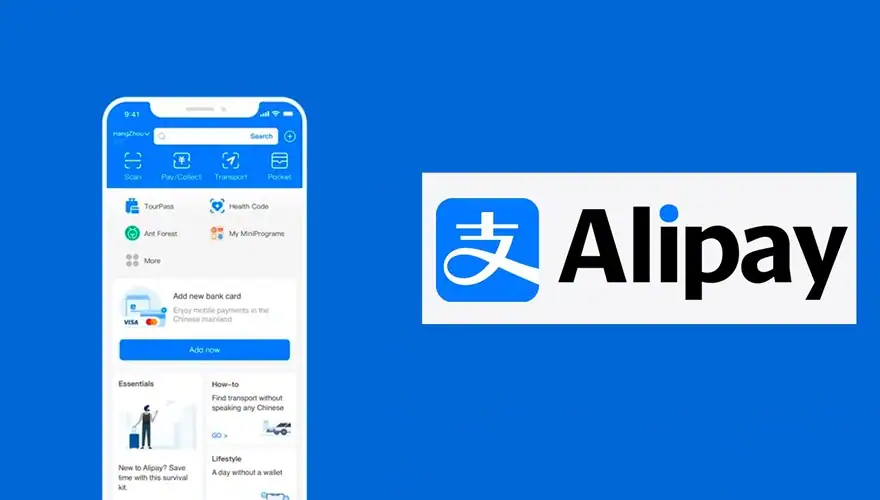
You land at Beijing Capital Airport. You try to buy a bottle of water. The 7-Eleven has a QR code on the counter. The cashier looks at your credit card and shakes her head. The metro turnstile wants you to scan a QR code from Alipay. The taxi driver does not accept cash. This is China in 2026.
It is one of the world’s most cashless societies and it runs on two apps: Alipay (There is the version – Alipay for foreigners) and WeChat Pay. If you do not have one of them set up before you land, the first hour is going to be very frustrating. This guide sets you up properly before you leave home.
Key Takeaways
- Set up Alipay before you fly. Cannot be done after arrival without extra steps.
- Alipay accepts foreign Visa, Mastercard, and Amex since 2023.
- WeChat Pay is the alternative. Set up both as backup. WeChat Pay guide.
- Cash: ¥1,000 to ¥2,000 backup. Full cash guide: Cash vs Card in China.
- Foreign credit cards only work at international hotels and chain stores.
- If Alipay verification fails: Troubleshooting guide.
Why This Matters So Much
China processes over 80% of daily consumer transactions through mobile payments, according to Ant Group. The QR code on the counter has replaced the card terminal at most local businesses. This includes: local restaurants (all categories), street food vendors, convenience stores, wet markets, taxi apps, metro turnstiles, tourist site tickets, hospital registration, pharmacy purchases, and most online booking.
Foreign credit cards still work at international hotel chains, some upscale restaurants, and large department stores. That covers a small fraction of where you will actually want to spend money in China.
What is Alipay?
If you are new to the Chinese digital ecosystem, your first question is likely: what is Alipay? Created in 2004 by Jack Ma’s Alibaba Group (often described as the “Amazon of China”), Alipay initially started as an escrow service for the Taobao e-commerce platform, functioning very similarly to how PayPal operates in the West. However, over the last two decades, it has evolved into a “Super App.”
Today, Alipay (known in Mandarin as Zhifubao 支付宝) boasts over a billion active users. It is not just a digital wallet; it is an entire operating system for daily life in China.
For international travelers, understanding what Alipay is and having it installed is arguably just as important as having your passport.
Is Alipay Safe?
Given that you are downloading a foreign financial application and uploading your passport data, it is completely natural to ask: is Alipay safe?
The short answer is yes. Alipay is one of the most secure payment platforms in the world, processing trillions of dollars in transactions annually.
Setting Up Alipay: Step by Step
Step 1: Download the international version
Download the Alipay app from the App Store or Google Play. The app is called ‘Alipay’ in both stores. Make sure you are downloading the current version. Open it and select ‘International’ mode if prompted.

Step 2: Create an account
Register with your email address or phone number. Use a phone number that can receive international SMS for verification. Set a password. Your account is now basic level and can receive payments but has limited sending capability.
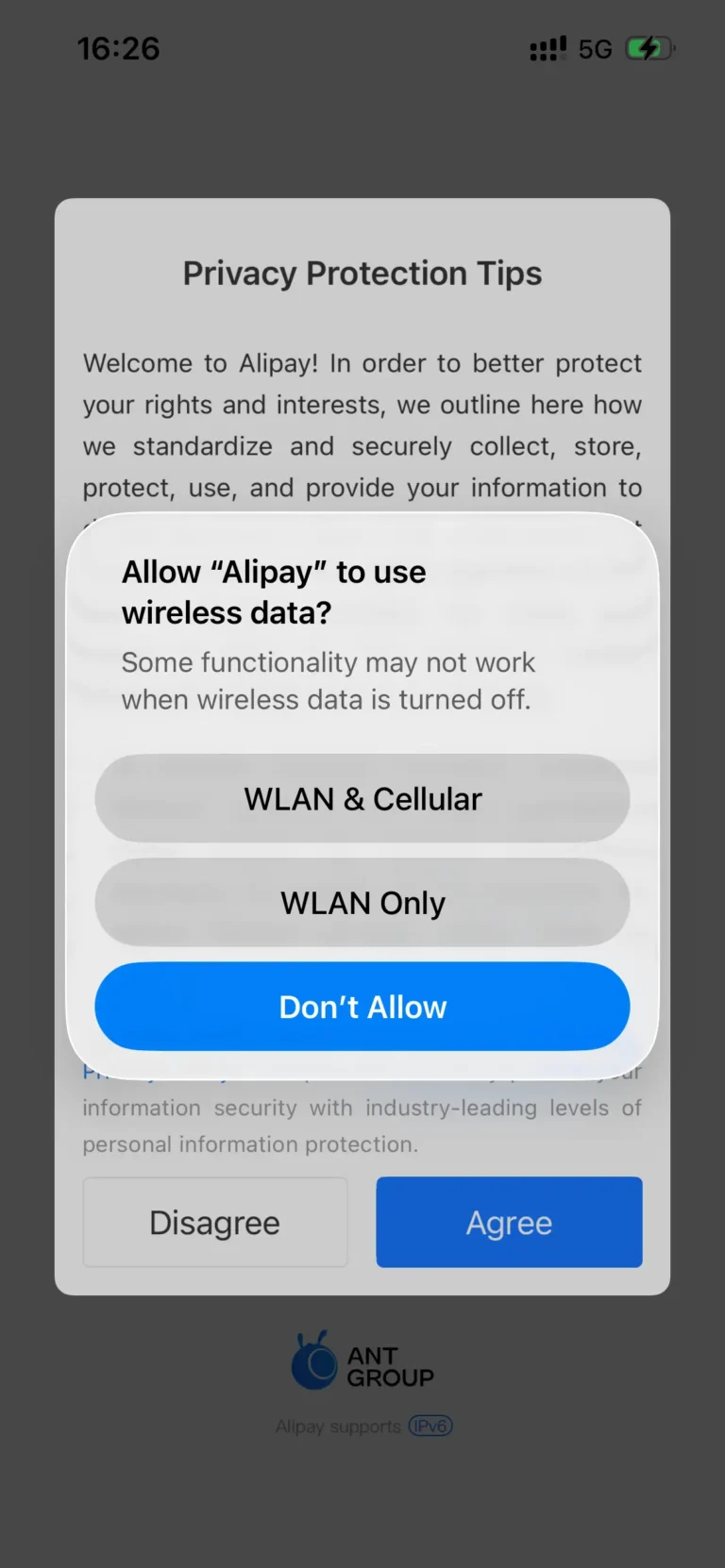
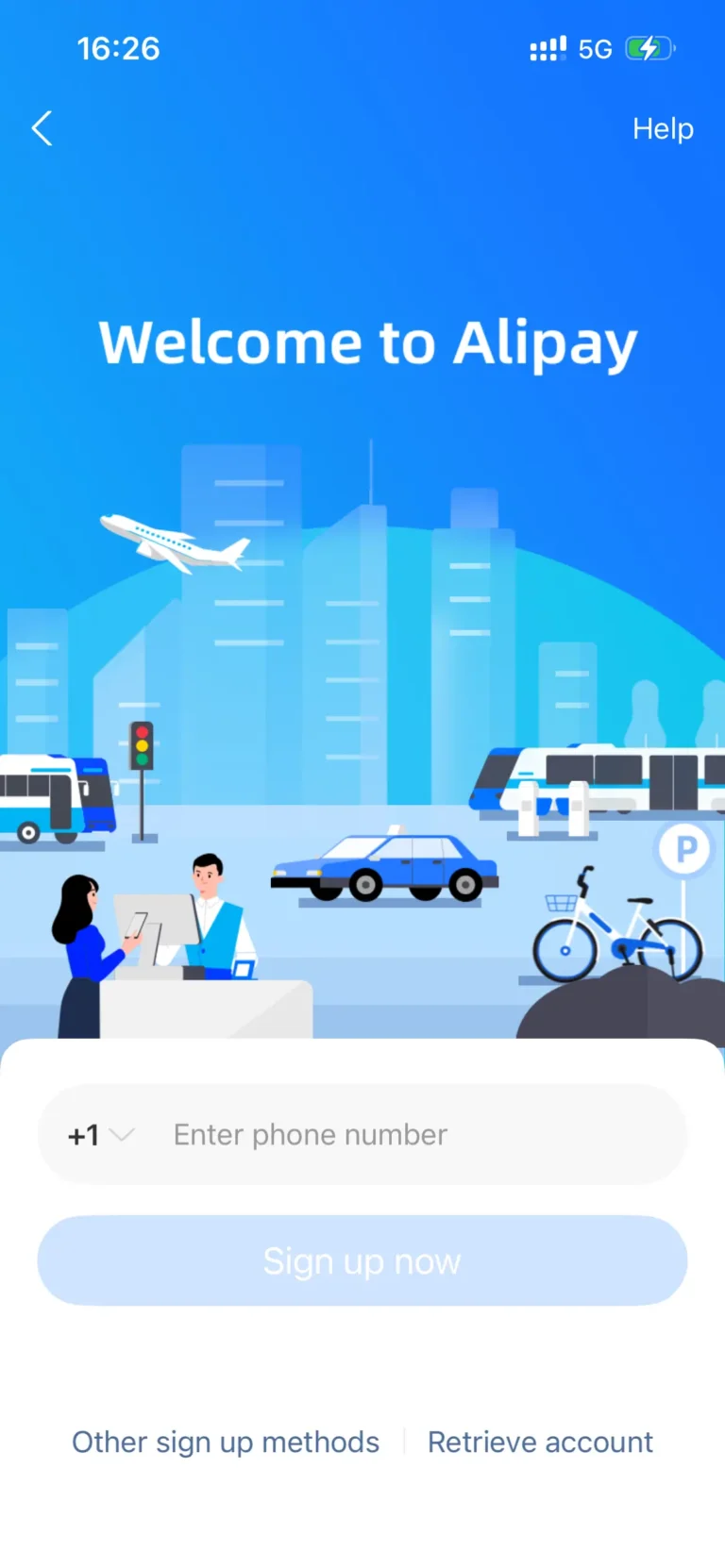
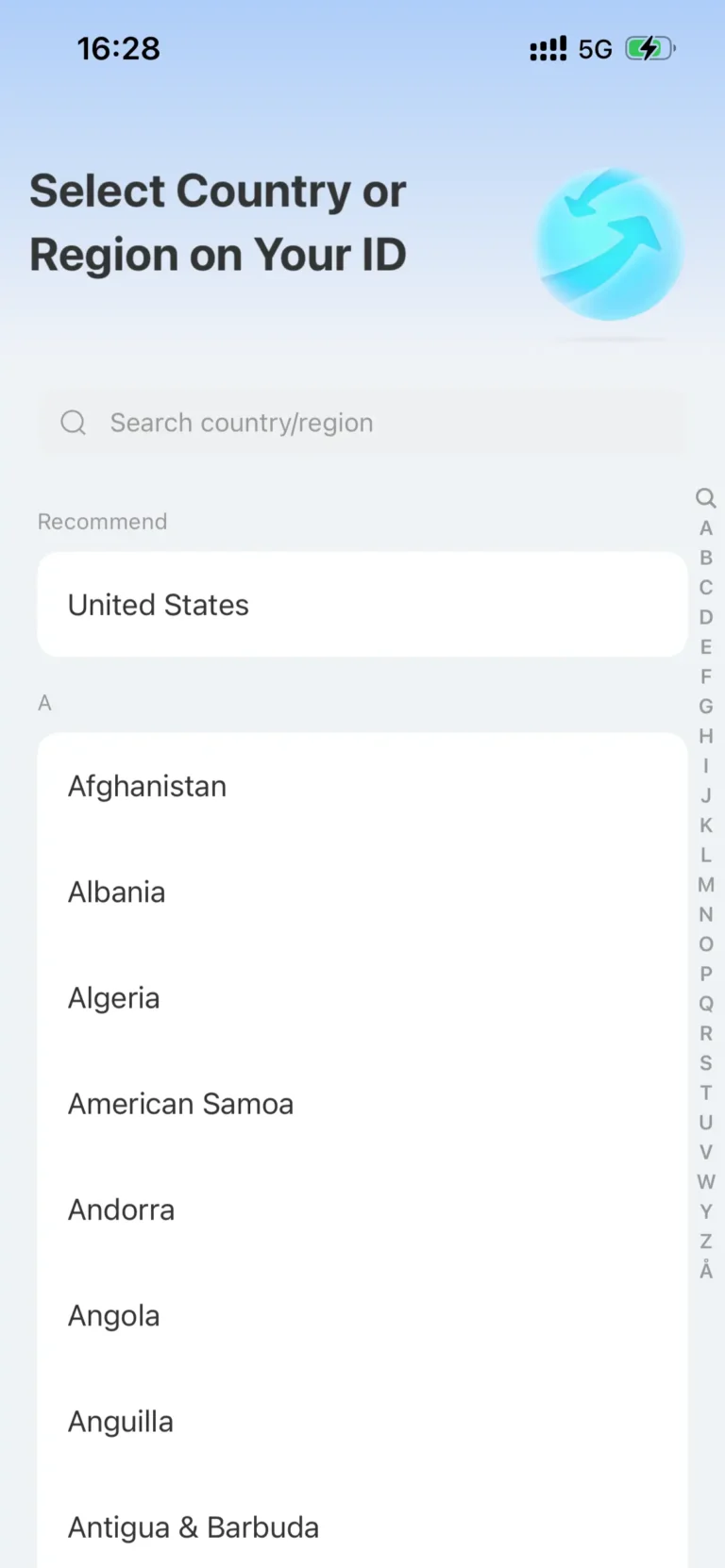
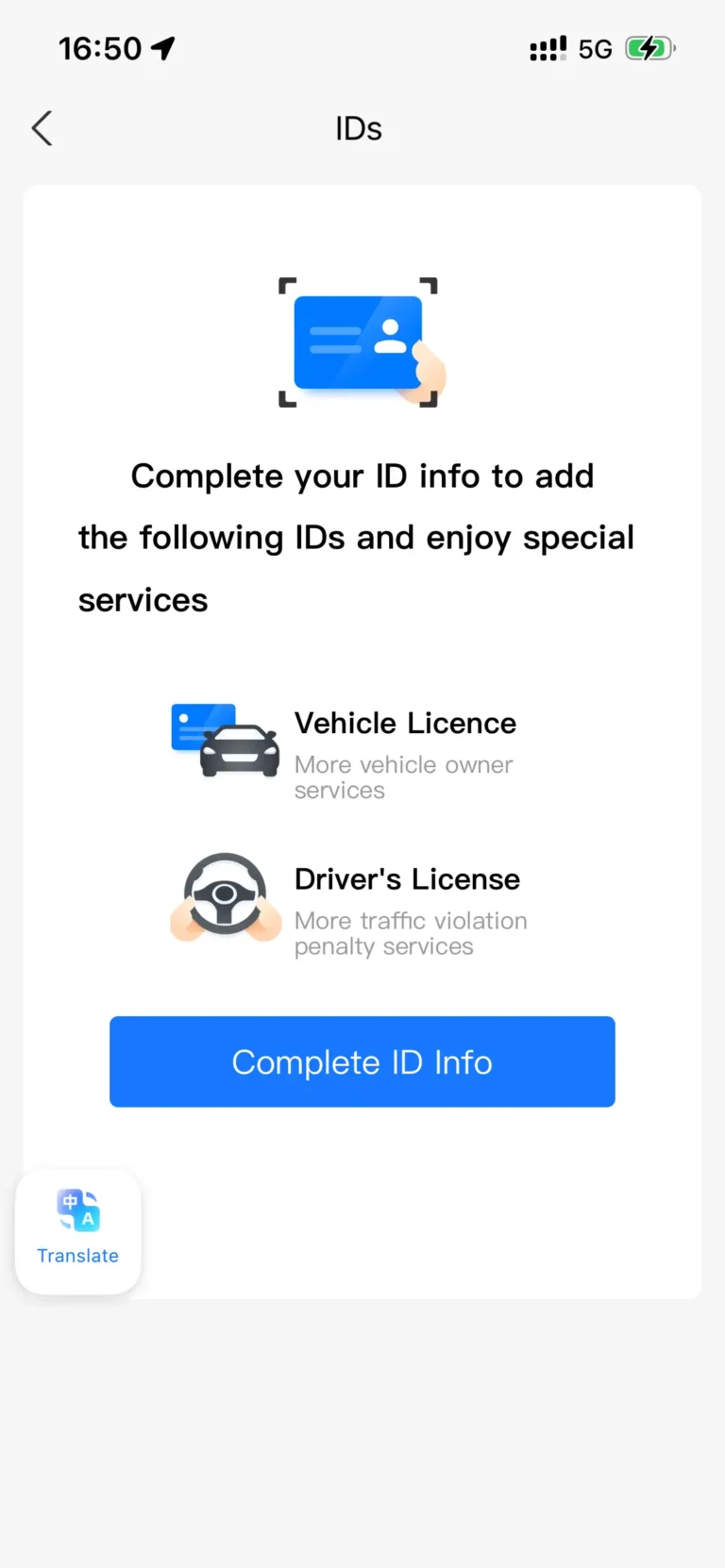
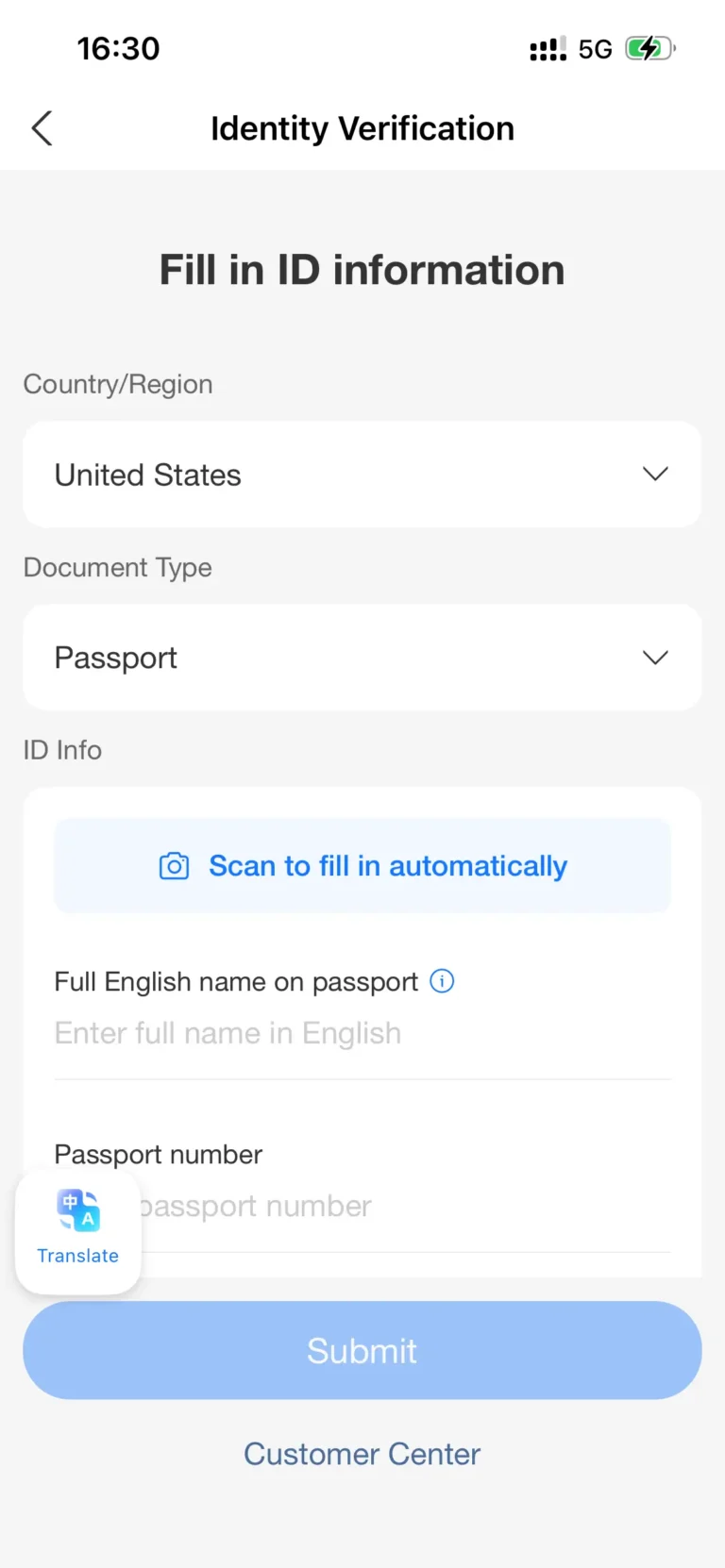
Step 3: Complete identity verification
Tap your profile photo at the top left. Go to ‘Verify Identity’ or ‘Real Name Verification.’ Select ‘Foreign Passport’ as your ID type. Enter your passport number, name exactly as printed on the passport, and nationality. Upload a photo of your passport data page and a selfie holding the passport. Verification takes minutes to a few hours.
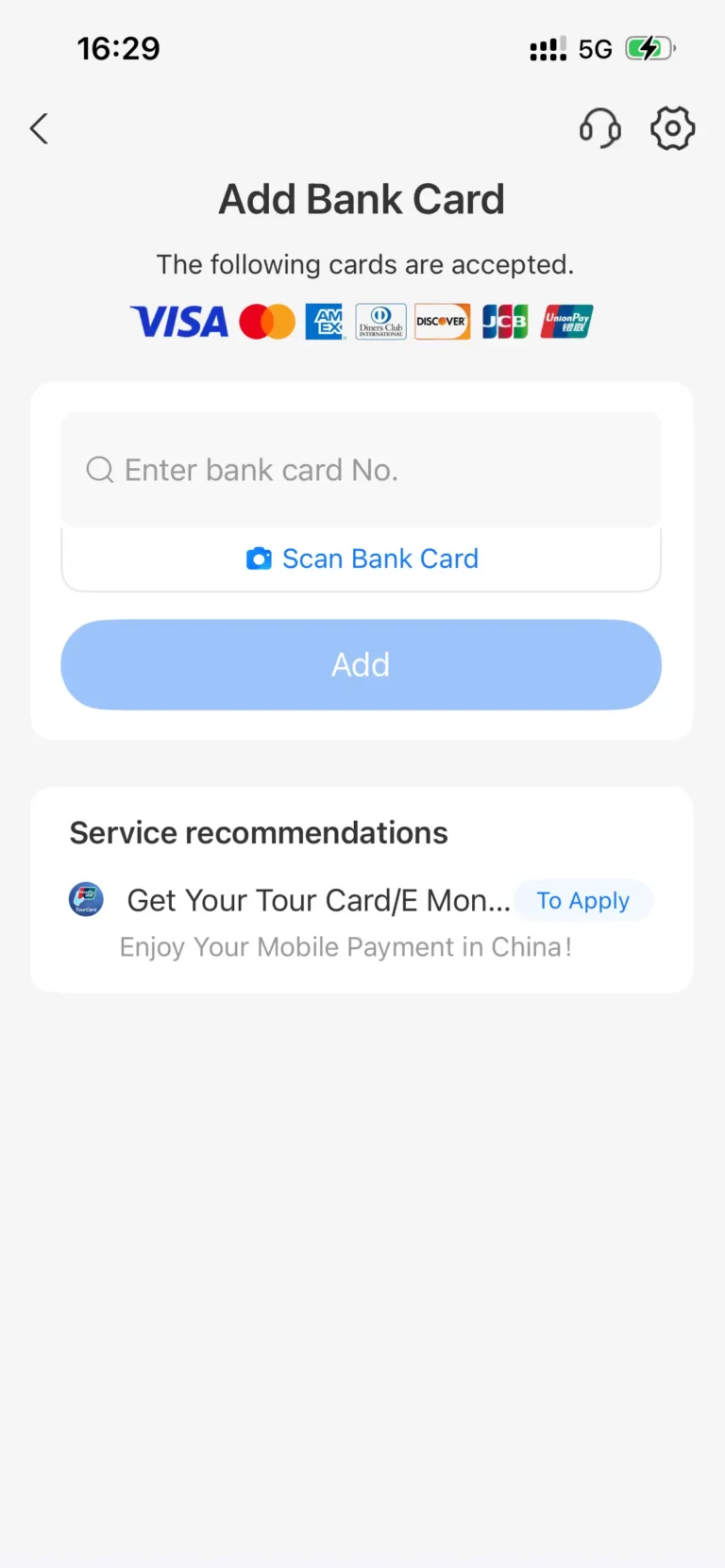
Step 4: Link your foreign card
Go to ‘My’ then ‘Bank Cards’ then ‘Add Card.’ Enter your Visa, Mastercard, or Amex details. You will receive a small authorization charge (usually $1) to verify the card. Confirm it. Your card is now linked. You can now pay anywhere in China that accepts Alipay.
Using Alipay to Pay
Once you are on the ground in China, paying is incredibly intuitive. There are three primary ways you will interact with the app.
Method A: “Scan to Pay” (You scan the merchant)
This is common at small street food stalls, mom-and-pop convenience stores, and local markets.
- The vendor will have a printed Alipay QR code sitting on their counter or taped to the wall.
- Open Alipay and tap the blue Scan button on the home screen.
- Point your camera at the vendor’s QR code.
- A screen will pop up asking you to input the payment amount. Type in the amount in RMB (e.g., 15.00).
- Tap “Pay”, authenticate with your fingerprint/Face ID or 6-digit PIN, and show the green “Success” screen to the vendor.
Method B: “Show to Pay” (The merchant scans you)
This is the standard method at larger establishments: supermarkets, chain restaurants, McDonald’s, Starbucks, and retail stores.
- When it is time to pay, open Alipay and tap the blue Pay/Collect button on the home screen.
- This generates your own personal, unique barcode and QR code.
- Hold your phone out to the cashier. They will use a barcode scanner gun to scan your screen.
- The money is instantly deducted from your linked card. You don’t even need to type in the amount.
Method C: Mini-Program Payments
When using services built inside Alipay—like hailing a DiDi ride or ordering delivery—payment is frictionless. When you reach the checkout screen within the mini-program, it will automatically pull up your linked Visa/Mastercard, and you simply tap “Confirm and Pay.”
Payment by Scenario
| Where You Are | How to Pay |
| Local noodle shop or restaurant | Alipay or WeChat Pay QR code. Show the merchant code at the counter. |
| Supermarket (local brand) | Alipay or WeChat Pay. Self-checkout accepts both. |
| Metro turnstile | Alipay transport QR code. Or buy a single-journey token at the machine with cash. |
| DiDi taxi | Automatic Alipay charge when ride ends. |
| Street food vendor | Alipay or cash. Most vendors have a QR code. |
| International hotel | Foreign Visa or Mastercard works fine at reception. |
| Tourist site (major) | Pre-book via WeChat mini-program. Alipay for on-site purchases. |
| Pharmacy | Alipay or cash. |
| Hospital (international clinic) | Alipay, WeChat Pay, or foreign card at payment window. |
Tip: DiDi (the ride-hailing app) links to Alipay for automatic payment. When your ride ends, Alipay is charged automatically. No cash, no tip, no interaction needed. Setup: DiDi guide.
WeChat Pay: The Backup
WeChat Pay is inside the WeChat app, which is also China’s main messaging platform. Setting up WeChat Pay requires the same identity verification as Alipay. The process is slightly more involved but the result is equivalent. Most places that accept Alipay also accept WeChat Pay. Having both gives you redundancy. Full setup guide: WeChat Pay for Foreigners.

Note: WeChat is notorious for randomly blocking new foreign accounts for “suspicious activity.” To avoid this, download the app a few weeks before your trip, send a few messages to friends, and link your card early to build account history.
Cash: How Much and Where to Get It
Carry ¥1,000 to ¥2,000 (about $140 to $280) in cash as a backup. It is almost never needed for regular transactions but occasionally required in rural areas, for guide tips, and at some older local establishments. Best ATMs for foreign cards: Bank of China (中国银行) and ICBC (工商银行). Both are on Visa and Mastercard Plus networks. Withdraw larger amounts at once to minimize per-transaction fees. For the full cash picture: Cash vs Card in China.
If Things Go Wrong
Alipay verification fails
The most common causes: name on card does not exactly match passport name, phone number cannot receive SMS, or the passport upload was rejected for photo quality. Try with a different card. Ensure lighting is good for passport photos. Full troubleshooting: Alipay Verification Failed guide.
Alipay limits
Foreign accounts have lower daily spending limits than domestic Chinese accounts. The limit for most foreign users is ¥50,000 per year (about $7,000). This is more than enough for most trips. If you hit the limit, switch to WeChat Pay or use your hotel’s account for large purchases.
No signal, no battery
If your phone dies or you have no data, you cannot use Alipay. Keep your phone charged above 20% when out sightseeing. Keep your emergency cash for this situation. Most 7-Eleven and FamilyMart stores in major cities accept foreign Visa cards as a fallback.
Alipay Transaction Fees and Limits
One of the most common questions regarding Alipay for foreigners is how much it costs to use the service. In 2026, the fee structure is highly favorable to tourists, provided you understand the 200 RMB Rule.
The Alipay 3% Fee Explained
When you pay a merchant using a foreign-issued credit card linked to Alipay, the transaction fees work like this:
- Transactions Under 200 RMB (Approx. $28 USD): Alipay waives all transaction fees. The fee is 0%.
- Transactions Over 200 RMB: Alipay applies a flat 3% transaction fee to the total amount.
Real-World Example:
If you buy a coffee for 30 RMB, Alipay charges your Visa card exactly 30 RMB.
If you pay for a nice dinner that costs 500 RMB, Alipay will charge your Visa card 515 RMB (500 + 15 RMB fee).
Pro-Tip: If you are at a restaurant and the bill is 350 RMB, you can kindly ask the cashier to split the bill into two separate transactions of 175 RMB each. Because both transactions are under the 200 RMB threshold, you will entirely avoid the 3% fee! Most Chinese cashiers are happy to accommodate this.
Your Bank’s Foreign Transaction Fees
It is crucial to understand that Alipay’s fee is separate from your own bank’s fees. If you link a standard debit card or basic credit card, your home bank might charge you a 1% to 3% “Foreign Transaction Fee” for every purchase made in a foreign currency.
To avoid this, you should only link a dedicated travel credit card (like the Chase Sapphire Preferred, Capital One Venture, or a Monzo/Revolut debit card) that explicitly boasts Zero Foreign Transaction Fees.
Spending Limits for Foreigners
To prevent money laundering, Alipay places caps on how much foreign users can spend:
- Single Transaction Limit: Approximately 35,000 RMB (roughly $4,800 USD).
- Monthly Limit: 100,000 RMB (roughly $13,700 USD).
- Annual Limit: 500,000 RMB (roughly $68,500 USD).
For 99% of tourists and business travelers, these limits are more than enough to cover hotels, high-speed trains, food, and daily expenses.
What is the Alipay TourCard?
During your setup, you might see an option for the “TourCard” mini-program. This is a legacy system where you load a prepaid virtual Bank of Shanghai debit card using your foreign credit card.
Do not use the TourCard. It charges a massive 5% top-up fee just to load the money, limits your funds, and expires after 180 days, making refunds a nightmare. Directly binding your Visa/Mastercard (as outlined in Step 3) is vastly superior, cheaper, and more reliable.
Frequently Asked Questions (FAQs)
The Essential Pre-Trip Tech Checklist
Setting up your payment apps is just one piece of the puzzle. To ensure your digital life functions smoothly behind the Great Firewall, you must have your logistics locked down. Be sure to review these critical resources before your trip:
- Visa Requirements: Before you can spend money, you have to get in. Ensure you have the correct documentation by reading our China Visa Policy Guide 2026.
- General Logistics: Overwhelmed by itinerary planning? Our China Travel Guide 101 breaks down the best seasons to visit and the top destinations for first-time travelers.
- Internet Access (Crucial for Payments): You cannot load your Alipay QR code if you don’t have internet access. Do not rely on your home carrier’s roaming limits. Read our deep dive into the Best SIM Card for China to decide between a local physical SIM or a firewall-bypassing tourist eSIM.
- Bypassing Censorship: If you plan on using local hotel Wi-Fi, you will be blocked from accessing Google, Gmail, and Instagram. You must have a VPN installed before you arrive. Check out our updated speed tests for the Best VPN for China.