
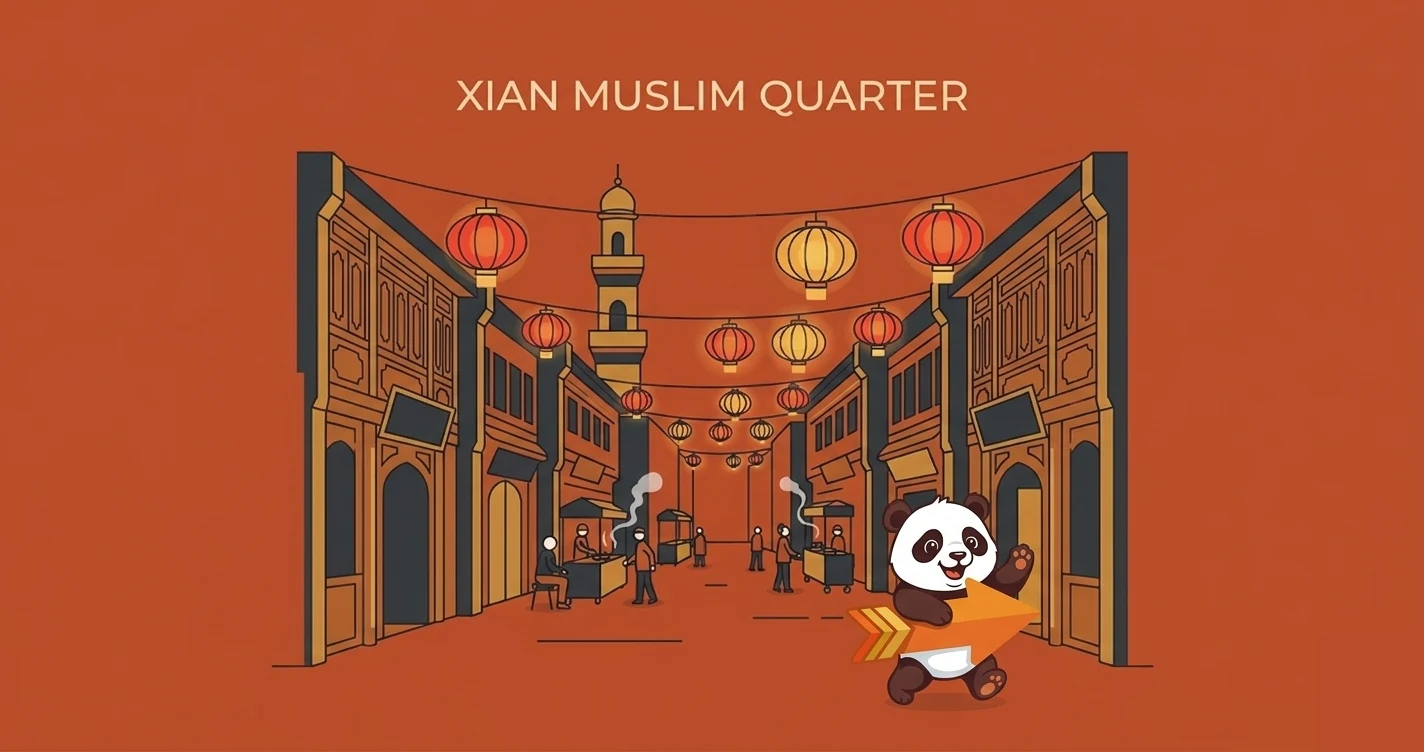
At 9pm on a Thursday the main street is shoulder to shoulder. Lamb skewers smoke over charcoal on both sides. A woman at a marble counter tears flatbread into pieces for her paomo. The smells are cumin, lamb fat, chili oil, and frying dough, all at once. The Muslim Quarter has been here since the Tang dynasty (618 to 907 AD). The Great Mosque inside it was founded in 742 AD. This is not a recreated attraction. For Xi’an context: Xian Travel Guide.
What to Eat
Roujiamo (肉夹馍)
Slow-braised pork spiced with over 20 herbs, chopped and stuffed into freshly baked flatbread. The bread should be crispy outside, yielding inside. ¥10 to ¥15. Queue at a stall with fast turnover.
Paomo (泡馍)
Order at a restaurant, not a stall. Receive a dry flatbread. Tear it into pieces the size of a fingernail. Hand the bowl to the server. Lamb broth arrives hot. Condiments: pickled garlic, chili sauce. ¥30 to ¥50.
Biang biang noodles
Belt-wide hand-pulled noodles. Hot oil poured over chili, garlic, and scallion tableside. The sizzle is part of the meal. ¥15 to ¥25. Full guide: Biang Biang Noodles guide.
Pomegranate juice (石榴汁)
Fresh-pressed at street machines throughout the quarter. ¥10 to ¥15. Xi’an pomegranates come from Lintong district east of the city. Drink it cold.
The Great Mosque
Turn off the main food street westward and follow lanes to the mosque. Founded in 742 AD during the Tang dynasty. Built in Chinese architectural style: tiled roofs, carved wooden screens, courtyard with ancient trees. No dome, no Arabic minaret. The prayer hall faces west toward Mecca. Entry ¥25. Modest dress. Mornings are quieter.
Frequently Asked Questions
For Xi’an overview, read this: Xian Travel Guide. For biang biang noodles, check this: Biang Biang noodles Guide.