

China runs two completely separate transit visa-free policies. Most travel articles cover one or the other and leave you confused about which one applies to your trip. This guide covers both clearly, compares them in one table, and walks through the scenarios that trip people up, especially anything involving Hong Kong, Macau, or the new West Kowloon rail connection.
Key Takeaways
- 24-hour transit: Available to any nationality. You must stay in the restricted port area — no entering China proper.
- 240-hour (10-day) transit: Available to 55 countries. You can leave the airport and explore Chinese cities.
- Both require an onward ticket to a third country (not your origin country).
- HK, Macau, and Taiwan all count as third destinations for transit purposes.
- West Kowloon HSR Station was added in November 2025 — you can now enter/exit via HK bullet train.
- 65 ports across 24 regions are covered for the 240-hour policy.
The Two Policies at a Glance
| 24-Hour Transit (TWOV) | 240-Hour Transit (10-Day) | |
| Who qualifies | Any nationality | 55 specific countries only |
| How long | Up to 24 hours | Up to 240 hours (10 days) |
| Can you leave the airport? | No — restricted zone only | Yes — explore multiple cities |
| Onward ticket required? | Yes, to third country | Yes, to third country |
| Advance application? | No | No |
| Digital Arrival Card? | Not required for under 24h | Yes, required |
| Best for | Long layovers, tight connections | Actual sightseeing stopovers |
The 24-Hour Transit (TWOV): What It Actually Means
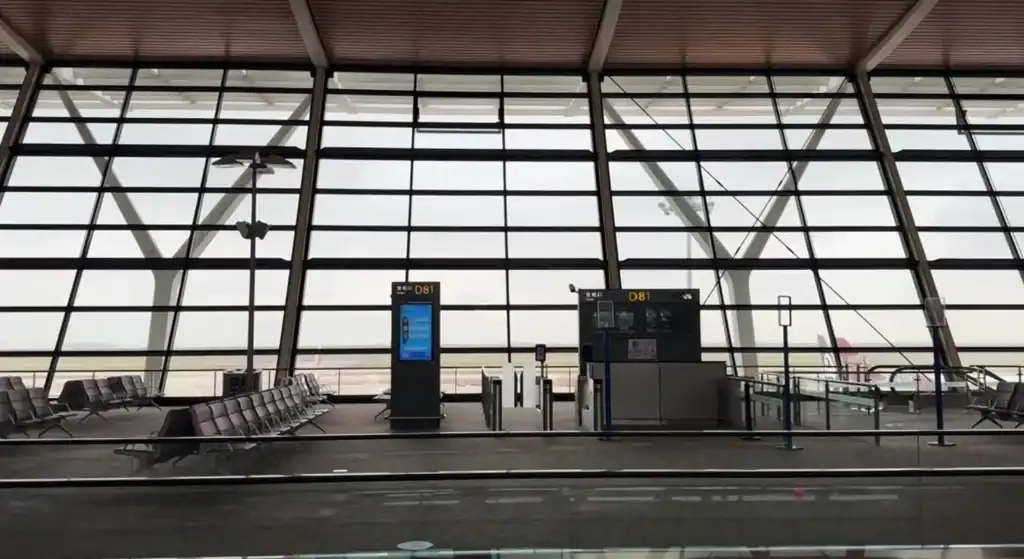
If you have a layover in a Chinese airport under 24 hours, you can stay in the international transit zone without going through immigration at all. You do not leave the secure area, you do not enter China, and you do not need a visa or any special documentation beyond your passport and onward boarding pass.
This applies to anyone from any country. It is the standard “you never actually entered the country” scenario that exists at airports worldwide. The catch: you are stuck in the airside zone. No city visits, no hotel outside the airport, no leaving.
The 240-Hour (10-Day) Transit: The Full Picture
Who is Eligible
Citizens of 55 countries holding ordinary (tourist) passports. The list covers most of Europe, USA, Canada, Australia, New Zealand, South Korea, Japan, Singapore, UAE, Qatar, Indonesia, and Brazil among others. See the full list in our transit visa step-by-step guide.
Eligible Ports and Regions
Since November 2025, 65 ports of entry across 24 provincial-level regions are covered. The most useful zones for travelers:
- Beijing zone: Beijing Capital Airport, Beijing Daxing Airport — explore Beijing, Tianjin, Hebei
- Shanghai zone: Shanghai Pudong, Shanghai Hongqiao, Hangzhou, Nanjing, Ningbo — explore the Yangtze Delta
- Guangdong zone (new Nov 2025): Guangzhou Baiyun Airport, Shenzhen, Zhuhai — includes HK-Zhuhai-Macao Bridge
- Sichuan: Chengdu Tianfu and Shuangliu — pandas, hotpot, day trips to Leshan Giant Buddha
- Shaanxi: Xi’an Xianyang — Terracotta Warriors, city wall, Muslim Quarter
- Yunnan: Kunming — gateway to Lijiang, Dali, Tiger Leaping Gorge
- West Kowloon HSR (new Nov 2025): Bullet train from Hong Kong to any mainland city in the zone

How to Plan Your Route
Your entry and exit ports must be in compatible zones. You can enter and exit through the same zone, or through different zones if both zones are listed as inter-zone compatible. The safest approach: enter and exit through the same zone, or check China Discovery’s updated port compatibility table before booking.
Itinerary examples that work:
- Los Angeles → Beijing (explore Beijing + Tianjin + Great Wall) → Hong Kong by bullet train ✓
- Toronto → Shanghai (explore Shanghai + Hangzhou + Suzhou) → Tokyo ✓
- London → Guangzhou (explore Guangdong + Shenzhen) → Singapore ✓
- London → Hong Kong HSR to Guangzhou (explore Guangdong) → flight to Bangkok ✓
The Hong Kong, Macau, and Taiwan Question
This confuses more travelers than any other aspect of China’s transit rules. Here is the definitive answer:
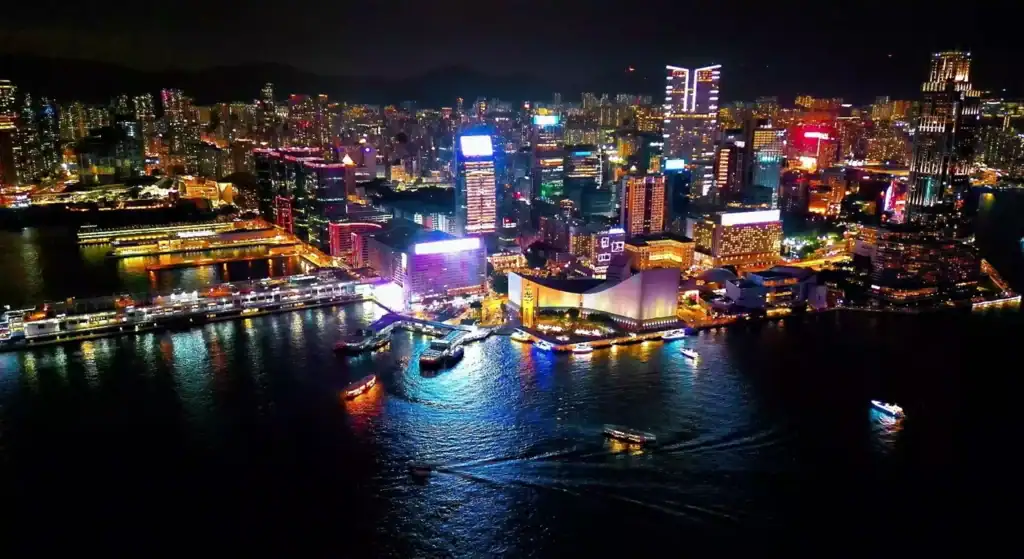
HK, Macau, and Taiwan all count as third countries/regions for the purpose of China’s transit policy. Flying New York → Beijing → Hong Kong is a valid transit itinerary. Taking the West Kowloon bullet train from mainland China to Hong Kong is a valid exit.
What does NOT work: flying from the US to China and back to the US. Your origin and destination must be different countries. Flying London → Shanghai → London does not qualify.
Common Pitfalls
- Airline staff unfamiliar with the policy: Some airline check-in agents are not trained on the 240-hour rule and may question your eligibility. Print the NIA official policy page (en.nia.gov.cn) to show them.
- Forgetting the Digital Arrival Card: Required for 240-hour transit since Nov 2025. Fill it at s.nia.gov.cn within 72 hours before arrival.
- Wrong zone combination: Entering through Beijing and trying to exit through Shanghai is not permitted under a single transit exemption. Plan your entry and exit in compatible zones.
- Hotel outside the covered region: Your accommodation during the transit period must be within the zone you entered through.
Frequently Asked Questions
For the full step-by-step application process and city-by-city planning guide, see our 240-hour transit guide. If your country qualifies for the easier 30-day visa-free entry, you may not need the transit policy at all.
This website really has all the information I needed
about this subject and didn’t know who to ask.
Thanks so much! I’m really glad the guide could answer those questions for you. That’s exactly why I put it together. Appreciate you stopping by to leave a comment!
My itinerary is USA-SEOUL-HONGKONG (via bullet train-Guilin -Xi’an-SEOUL-USA
Is this a valid itinerary that satisfies the requirements for a240 hours visa free entry China policy ?
Yes, your itinerary is completely valid for the 240-hour visa-free transit.
Here is why it works:
Valid Transit: Your immediate mainland route is Hong Kong → Mainland China → South Korea. Because you are entering from one region and leaving to a different one, it qualifies.
Approved Ports: Entering via the West Kowloon bullet train and exiting via the Xi’an airport are both permitted.
Travel Allowed: The 240-hour policy allows you to travel freely to Guilin and Xi’an.
What you must have at the border:
When clearing immigration at the Hong Kong train station, you simply need your passport and a confirmed, printed ticket for your flight from Xi’an to Seoul departing within the 240-hour window.
Heya i am for the first time here. I came across this board and I to find It really useful &
it helped me out much. I’m hoping to present something again and help others
such as you helped me.
What if I come from Australia and fly to Guangzhou, then go to Hong Kong by train and cross the bridge to Macao.
And back to Hong Kong to go to Guangzhou to fly back to Australia.
What visa should I get?
Hello,
My itinerary is US to Seoul, Korea (stay 9 days) then to Shanghai (stay 5 days) then to US. Does this qualify for the TWOV 240hr policy. I’ve been getting different responses so hope you can clarify.
Thank you
Hi Emerson! Yes, you are 100% good to go. The rule simply requires you to fly in from one country and fly out to a different one. Since your mainland segment is Seoul -> Shanghai -> US, it perfectly satisfies the requirement. Enjoy your 5 days in Shanghai!
Hello Rui Yu ,
Can I use the 240 Hour Visa Free Transit Waiver on both these itineraries;
a) Ulaanbaatar > Beijing > Chongqing > Hong Kong
I will clear customs and transit through Beijing to Chongqing ,same day.
While in Chongqing will take a 3 night river cruise to Yichang and return
to Chongqing. Will fly out of Chongqing to Hong Kong.
b) Yokohama ( Japan) Cruise > Tianjin Cruise Port > Shanghai Cruise Port > Shanghai >
San Francisco ( USA ) Flight.
Appreciate if you can tell me if these itineraries qualify to use the 240 Hour Visa Free Travel Waiver.
Kind Regards ,
Dave.
Hi Dave,
Yes, both of your itineraries perfectly qualify for the 240-Hour Visa-Free Transit!
Have an amazing time in China!
Best!
Rui